
Home Assistant vs Hubitat vs SmartThings: Best Hub in 2026
Velocity Stream is reader-supported. When you buy through links on our site, we may earn an affiliate commission at no extra cost to you.
Velocity Stream is reader-supported. When you buy through links on our site, we may earn an affiliate commission at no extra cost to you. As an Amazon Associate I earn from qualifying purchases. This helps us keep testing products and creating free content. How we test.
Your "Welcome Home" scene fails to run because your internet is down, leaving you fumbling for a light switch in the dark with an armful of groceries. This single point of failure is the frustrating reality of a smart home that depends entirely on the cloud. Choosing the right smart home hub—the central brain of your automated home—is the most critical decision you'll make, determining whether your home is truly smart or just a collection of internet-dependent gadgets.
The landscape of smart home hubs has matured, and in 2026, three platforms dominate the conversation for DIY enthusiasts: Home Assistant, Hubitat, and SmartThings. We've spent hundreds of hours building, testing, and troubleshooting automations on all three, focusing on the criteria that matter most: reliability, automation power, device compatibility, and overall user experience. This guide cuts through the noise to help you decide which platform will be the rock-solid foundation for your smart home for years to come.
Our Top Smart Home Hubs in 2026

For the ultimate in power and customization, nothing beats Home Assistant. The Green is an official, plug-and-play device that removes the hardware guesswork, offering a direct path to the most powerful, private, and versatile smart home platform on the market.
Check Price on Amazon →- 💡 EASIEST WAY TO GET STARTED WITH HOME ASSISTANT - With Home Assistant already installed, it only requires plugging the included power supp…
- ✅ OFFICIAL - This official Home Assistant hardware is built and supported by Nabu Casa, the team driving the development of Home Assistant.
- 🏡 DESIGNED FOR THE HOME - The small, fanless, and silent design packs a quad-core processor, 32GB of storage, and 4GB of RAM.

Hubitat strikes the perfect balance between power and simplicity. It offers robust, lightning-fast local processing that keeps your home running without the internet, all in an easy-to-set-up package that doesn't require a computer science degree.
Check Price on Amazon →- With the Hubitat Elevation C-8, you can easily control and automate lights, locks, switches, dimmers, blinds, thermostats, sensors, button…
- ENHANCED CAPABILITIES: The Hubitat Elevation Model C-8 is designed to seamlessly support standard ZIGBEE, Z-WAVE, and MATTER devices, as we…
- MATTER-compatible and integrates with MATTER BRIDGES, which convert Zigbee or Z-Wave devices into Matter devices. This expanded compatibili…
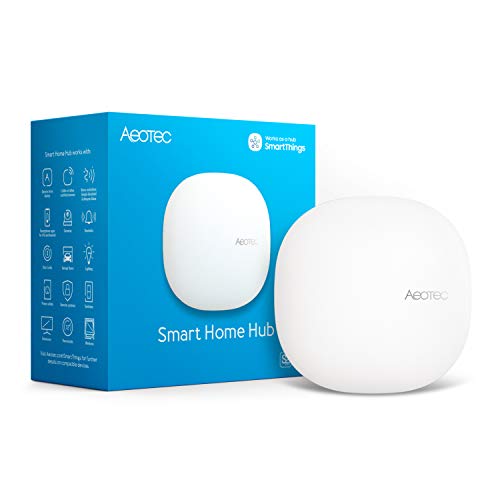
If you want a polished app and the most straightforward setup process, the Aeotec Hub is your entry point. Powered by the mature SmartThings platform, it makes adding devices and creating simple automations incredibly easy, with broad support for popular brands.
Check Price on Amazon →- Connect & control your smart home — Easily link thousands of compatible devices from leading brands to create a connected home environment…
- Automate your routines — Build custom automations using the SmartThings app to coordinate lights, sensors, switches, and other compatible d…
- Set up, manage, and automate devices using the SmartThings app on Android, iOS, or iPadOS. Works with popular voice assistants, including A…
How to Choose a Smart Home Hub
The "best" hub is subjective; it depends entirely on your technical comfort level, privacy concerns, and how deep you want to go with automation. Here are the key factors to consider.
Local vs. Cloud Processing
This is the most important distinction. Local processing means all your automation logic, device states, and data are stored and run on the hub inside your home. If your internet goes out, your automations still run. It's faster, more reliable, and infinitely more private. Home Assistant and Hubitat are built on a "local first" philosophy.
Cloud processing means your hub communicates with company servers over the internet to execute commands. If you tell Alexa to turn on a light, the command goes from your speaker, to Amazon's servers, to the device manufacturer's servers, and then back to the device in your home. While platforms like SmartThings are moving more basic automations to run locally, the core interface and many integrations still rely on the cloud. The main benefit is often a simpler remote access setup.
Device Compatibility (Z-Wave, Zigbee, Matter)
Your hub needs to speak the same language as your devices. The main low-power mesh protocols are Z-Wave and Zigbee. The latest hubs feature Z-Wave 800-series and Zigbee 3.0 chips, offering better range, security, and battery life. Wi-Fi devices are also common, but they can congest your network and each requires a separate cloud connection.
By 2026, Matter has become a significant player. This new standard aims to unify device communication, allowing a Matter-certified device to work with any Matter-certified controller. All three platforms support Matter, making it easier than ever to mix and match brands, but the quality of Z-Wave and Zigbee support remains a key differentiator for legacy and specialized devices.
Ease of Use vs. Automation Power
There's often a trade-off between a simple user interface and the power to create complex automations. SmartThings excels at ease of use with a polished, intuitive mobile app perfect for creating "if this, then that" rules. Hubitat's built-in "Rule Machine" app is significantly more powerful, allowing for complex conditional logic, variables, and triggers, but its interface is more utilitarian. Home Assistant is in a league of its own, offering near-limitless automation possibilities through its UI, YAML configuration files, and custom scripts. Its learning curve is the steepest, but the payoff is unparalleled control.
Community and Support
When something goes wrong or you want to try something ambitious, community support is invaluable. Home Assistant has a massive, incredibly active global community with forums, Discord channels, and countless YouTube tutorials for almost any project imaginable. Hubitat has a smaller but very dedicated and helpful official community forum where staff and expert users are quick to respond. SmartThings support is more traditional, relying on official documentation and a user forum that is large but can be harder to navigate for specific, complex issues.
Privacy and Data Control
With a local-first platform like Home Assistant or Hubitat, you own your data. It stays within your home network unless you explicitly choose to expose it for remote access. With a cloud-dependent platform like SmartThings, your device usage data is processed on company servers, subject to their privacy policies. For users who prioritize privacy, a local-control hub is the only real option.
Top Picks Compared
1. Home Assistant Green — Best Overall
Key Spec: Unmatched Customization
Home Assistant (HA) isn't just a hub; it's a complete open-source smart home platform. For years, running it meant sourcing your own hardware like a Raspberry Pi. The Home Assistant Green changes that, offering an affordable, official, and perfectly optimized box that gets you up and running in minutes. You plug it in, connect it to your network, and access a web interface to begin building your smart home.
HA's greatest strength is its library of over 2,000 integrations. If a device has an API, chances are someone in the community has built an integration for it. This allows you to unify everything—from your smart lights and security cameras to your car, solar panels, and even your lawn sprinkler—into a single, cohesive dashboard. The automation engine is staggeringly powerful, allowing you to create logic that simply isn't possible on other platforms. Want to flash the lights blue when your favorite team scores, but only if it's after 7 PM and the security system is armed? Easy. Want to adjust your thermostat based on the real-time price of electricity? Done. The learning curve is real, but recent updates have made the user interface dramatically more friendly for newcomers.
Pros:
- Completely local and private
- Massive library of official and community-built integrations
- Extremely powerful and flexible automation engine
- Vibrant, helpful, and massive community
- No subscription fees for core functionality
Cons:
- Steeper learning curve than competitors
- Requires more hands-on configuration and maintenance
2. Hubitat Elevation C-8 — Best for Local Control
Key Spec: Fast, Private, Local Processing
Hubitat Elevation is the answer for users who crave the speed, reliability, and privacy of local control but don't want the tinkering and maintenance that comes with Home Assistant. The Model C-8 is a mature and powerful piece of hardware, boasting an external antenna and the latest Z-Wave 800-series and Zigbee 3.0 radios for excellent range and performance.
Hubitat's motto is "Automate Your Home, Your Way," and it delivers. Everything runs locally on the small black box. Once a device is paired, automations execute instantly, without any round-trip to the cloud. Its built-in applications, especially Rule Machine, provide a depth of automation that far surpasses SmartThings. You can create intricate rules with multiple conditions, variables, and actions. While the web-based UI can feel a bit dated compared to slick mobile apps, it's functional and fast. The mobile app is primarily for presence detection and receiving notifications, with dashboards available for control, but the real power lies in the web admin interface where you build your automations.
Pros:
- All automations run locally for speed and reliability
- Powerful built-in automation apps like Rule Machine
- Latest Z-Wave 800 and Zigbee 3.0 radios
- No cloud dependency for core operations
- One-time hardware cost, no subscriptions
Cons:
- Web interface feels less modern than competitors
- Smaller integration library than Home Assistant
3. Aeotec Smart Home Hub — Best for Beginners
Key Spec: Polished User Experience
After Samsung ceased making its own hardware, long-time partner Aeotec stepped in to produce the official "Works with SmartThings" hub. This device is the gateway to the SmartThings platform, which remains one of the most user-friendly and widely supported smart home ecosystems available. The setup process is dead simple: plug it in, download the app, scan a QR code, and you're ready to start adding devices.
The SmartThings mobile app is beautiful, intuitive, and makes creating simple automations a breeze. It has excellent support for a vast range of Z-Wave, Zigbee, and Wi-Fi devices from major brands like Philips Hue, Ring, and Arlo. While SmartThings has made strides in running more basic "if-then" automations locally (a feature they call "Edge Drivers"), the platform is still fundamentally cloud-based. The app itself requires an internet connection to function, as do many third-party integrations and more complex automations. For users who prioritize a polished app experience and don't mind the cloud dependency, SmartThings is a fantastic and accessible starting point.
Pros:
- Extremely easy to set up and use
- Slick, modern mobile app for iOS and Android
- Broad support for popular consumer smart home brands
- Growing library of "Edge Drivers" for local execution
Cons:
- Heavily reliant on the cloud for app access and many integrations
- Automation capabilities are less powerful than Hubitat or HA
- Platform direction is controlled by a large corporation (Samsung)
Side-by-Side Comparison
| Product | Best For | Local Control | Ease of Use | Automation Power |
|---|---|---|---|---|
| Home Assistant Green | Tinkerers & Power Users | Complete | Low (Steep Curve) | Exceptional |
| Hubitat Elevation C-8 | Privacy & Reliability | Complete | Medium | High |
| Aeotec Smart Home Hub | Beginners | Partial | High | Moderate |
Frequently Asked Questions
Do I still need a smart home hub in 2026 with Matter?
Yes. While Matter helps devices talk to each other, you still need a central controller or "hub" to create automations, manage the devices, and connect them to your network. Hubs like Home Assistant, Hubitat, and SmartThings act as Matter controllers, and they are also essential for integrating non-Matter devices like Z-Wave and many older Zigbee products.
Which hub is best for privacy?
Home Assistant and Hubitat are the clear winners for privacy. Because they are designed to run entirely locally, your personal data, device usage patterns, and automation schedules never have to leave your home network. This minimizes your exposure to corporate data collection and potential cloud security breaches.
Can I switch from SmartThings to Hubitat or Home Assistant?
Yes, many people make this transition as their needs grow. Migrating involves excluding all your Z-Wave and Zigbee devices from your old hub and including them on the new one. This can be time-consuming, as you'll also need to recreate all your automations and scenes on the new platform. However, the benefits of increased speed, privacy, and power are often well worth the effort.
Can I use voice assistants like Alexa and Google Assistant with these hubs?
Absolutely. All three platforms have robust integrations with Amazon Alexa and Google Assistant. You can expose specific devices and scenes to your voice assistant, allowing you to control your locally-managed smart home with simple voice commands. The integration process varies slightly, with Home Assistant offering the most customizable but also most complex setup (via an optional cloud subscription called Nabu Casa for simplicity).
The Bottom Line
In 2026, choosing a smart home hub is about aligning the platform's philosophy with your own goals. There is no single "best" hub, only the best hub for you.
The Aeotec Smart Home Hub is the undisputed champion for beginners. If your goal is to unbox a device, connect a few lights and sensors through a beautiful app, and have it just work, SmartThings is your platform. It's the path of least resistance to a smarter home.
The Hubitat Elevation C-8 is the perfect middle ground and the ideal upgrade for those frustrated by cloud outages. It delivers the local-first promise of speed and privacy in a dedicated, easy-to-manage appliance. It's for the user who wants powerful, reliable automations without the deep-seated need to tinker with system files.
Finally, Home Assistant, especially when paired with the Home Assistant Green, remains the pinnacle of smart home control. It's a hobbyist's dream, offering limitless potential for integration and automation. If you see your smart home as a creative project and want total control over every aspect of its operation, Home Assistant is not just the best choice—it's the only choice.